Ship Technology Days 2026 – Turning new technology into operations
Mar 19, 2026
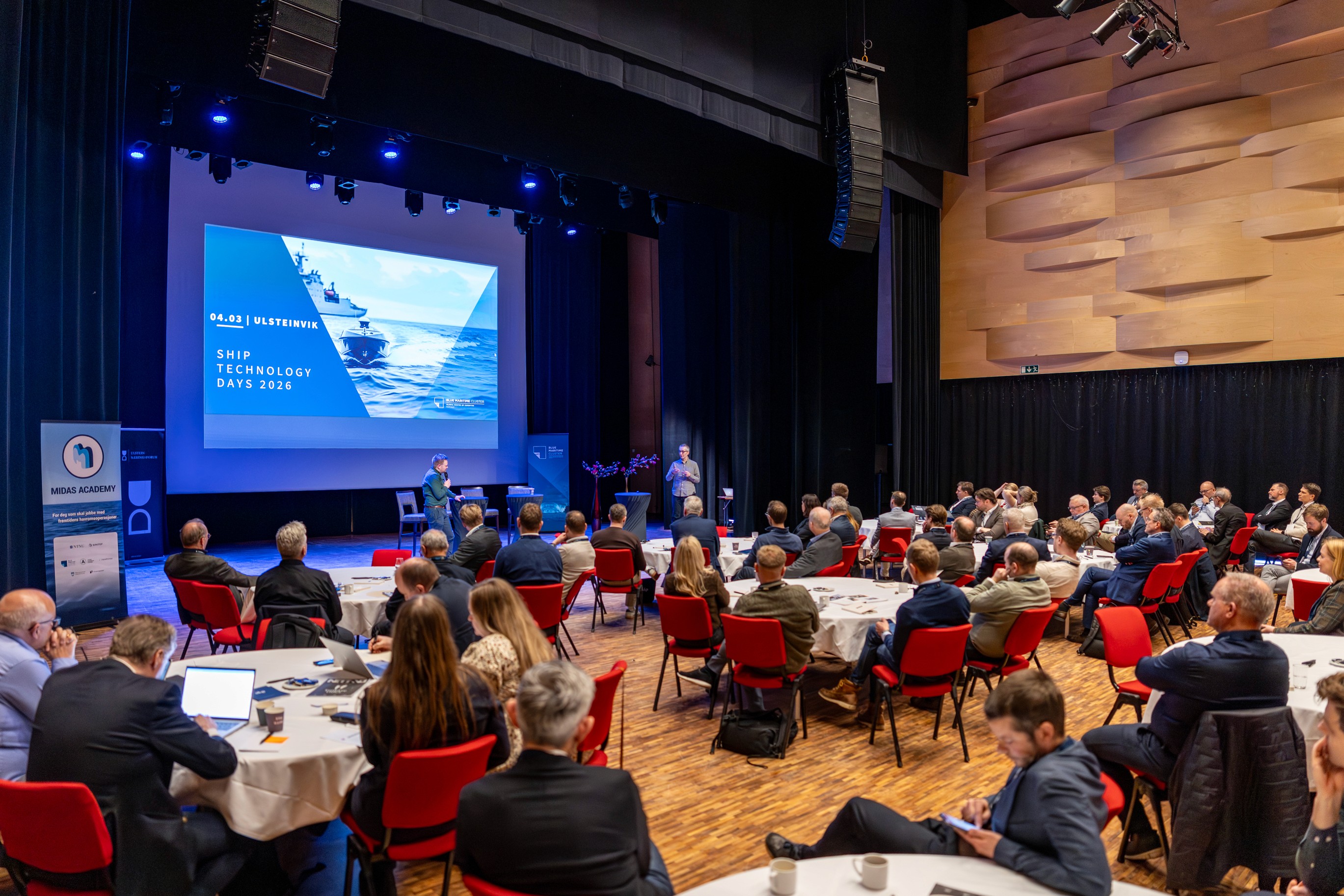
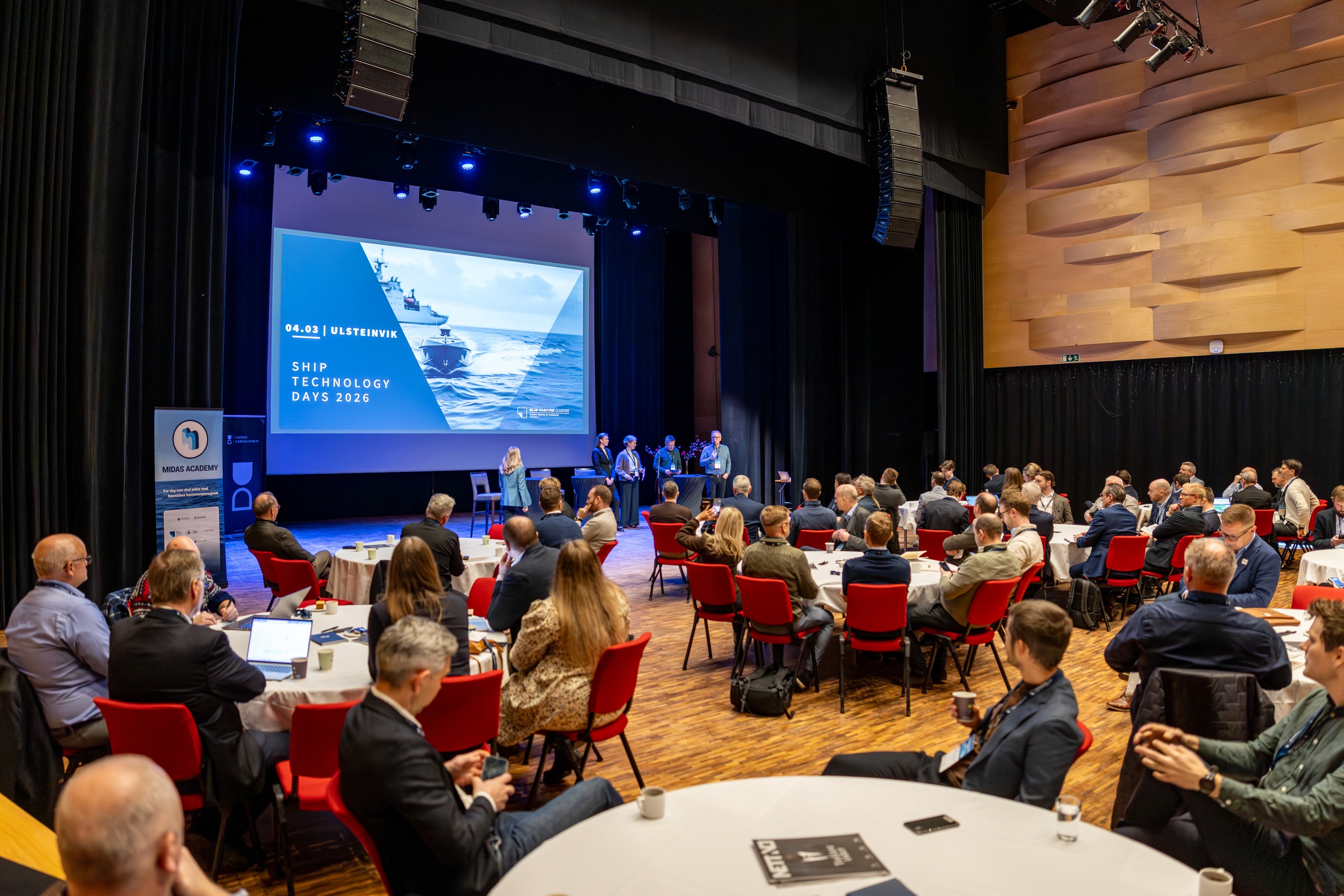
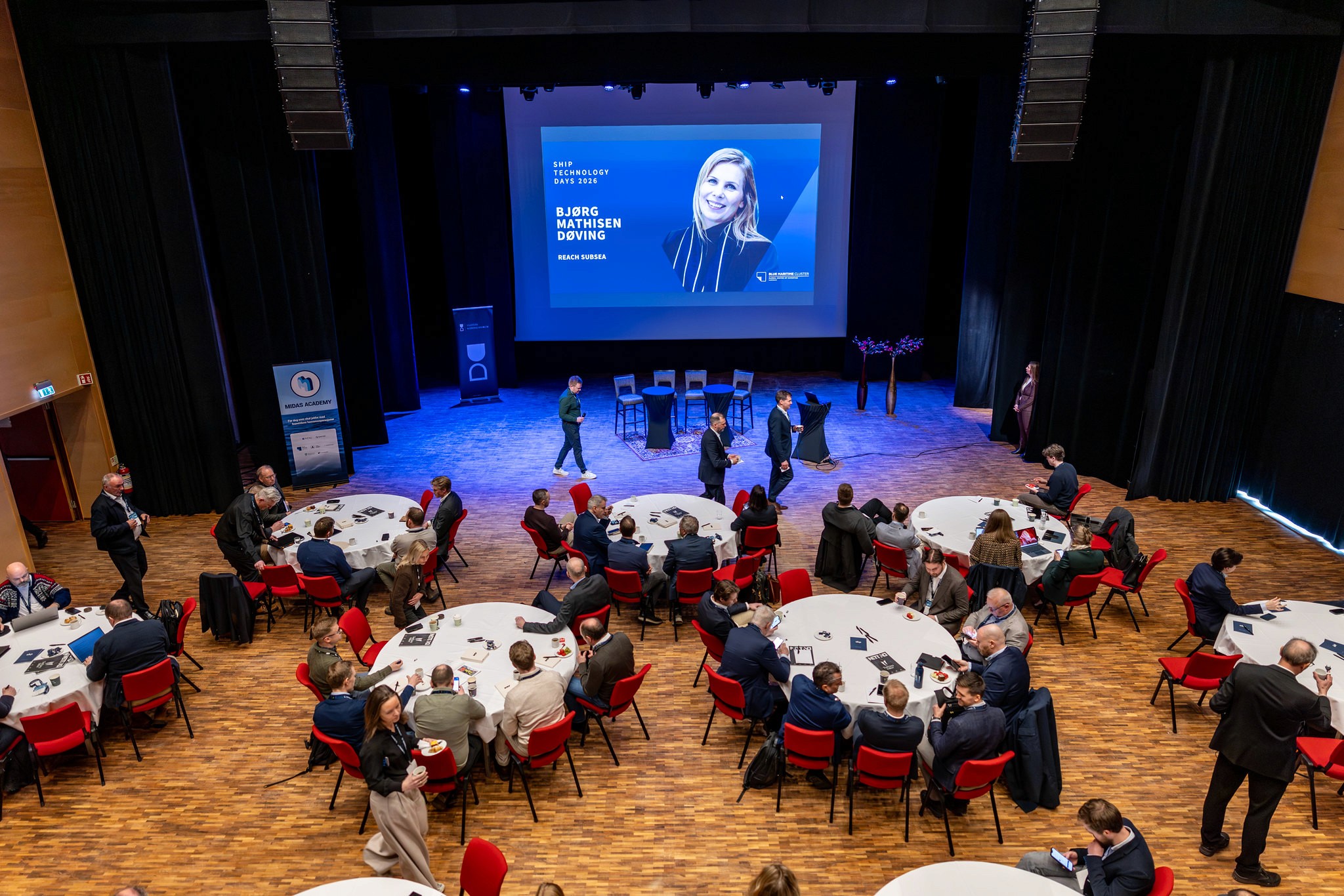
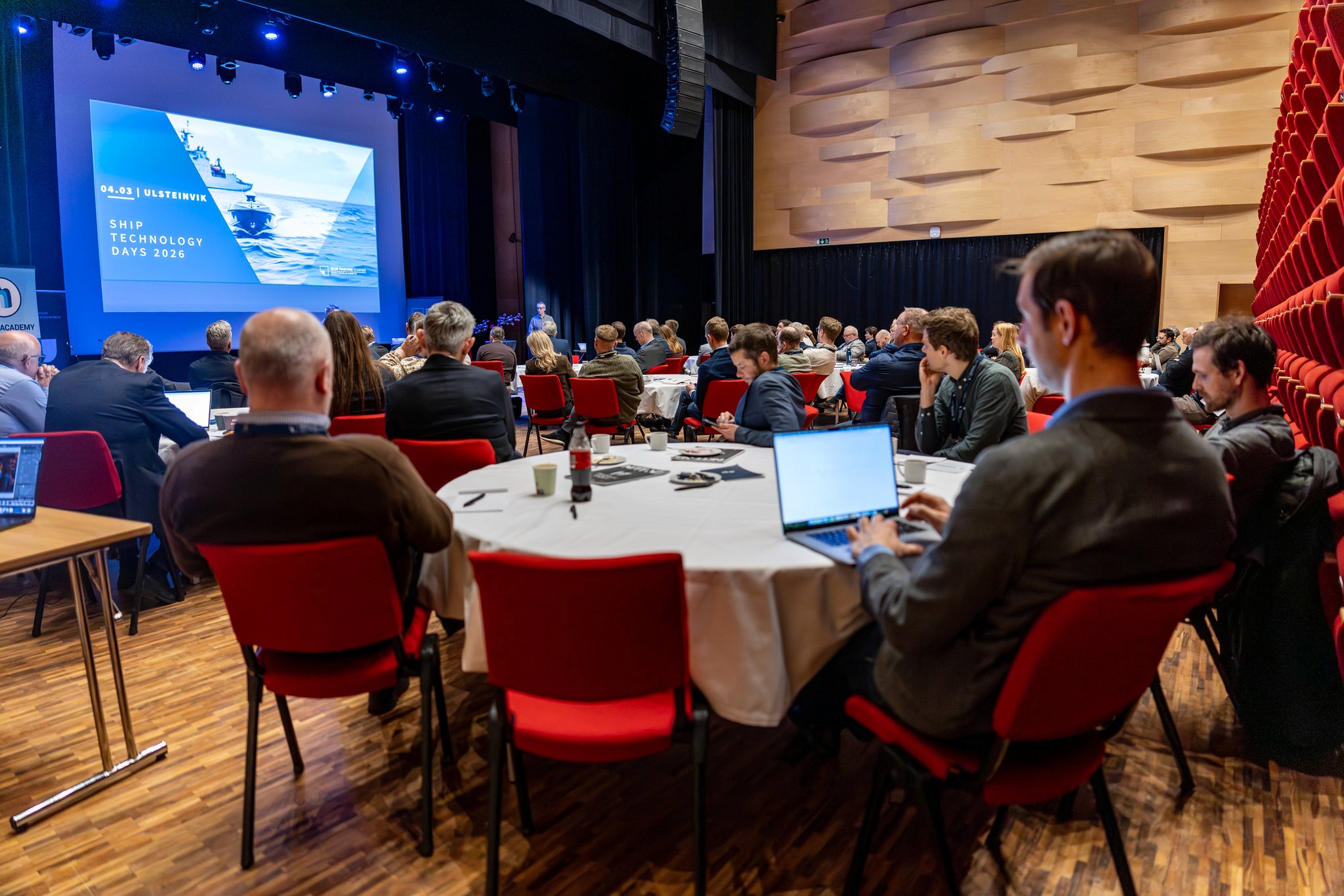
Ship Technology Days has, over four editions, established itself as a key meeting place for the maritime industry. Bringing together around 100 participants from R&D, industry, authorities, and academia, the conference focuses on the forefront of maritime technology and how it is applied in real operations.
The event is a result of strong collaboration between GCE Blue Maritime, MAFOSS and Ulstein Næringsforum, reflecting a shared ambition to strengthen innovation, competence and industrial development across the maritime ecosystem.
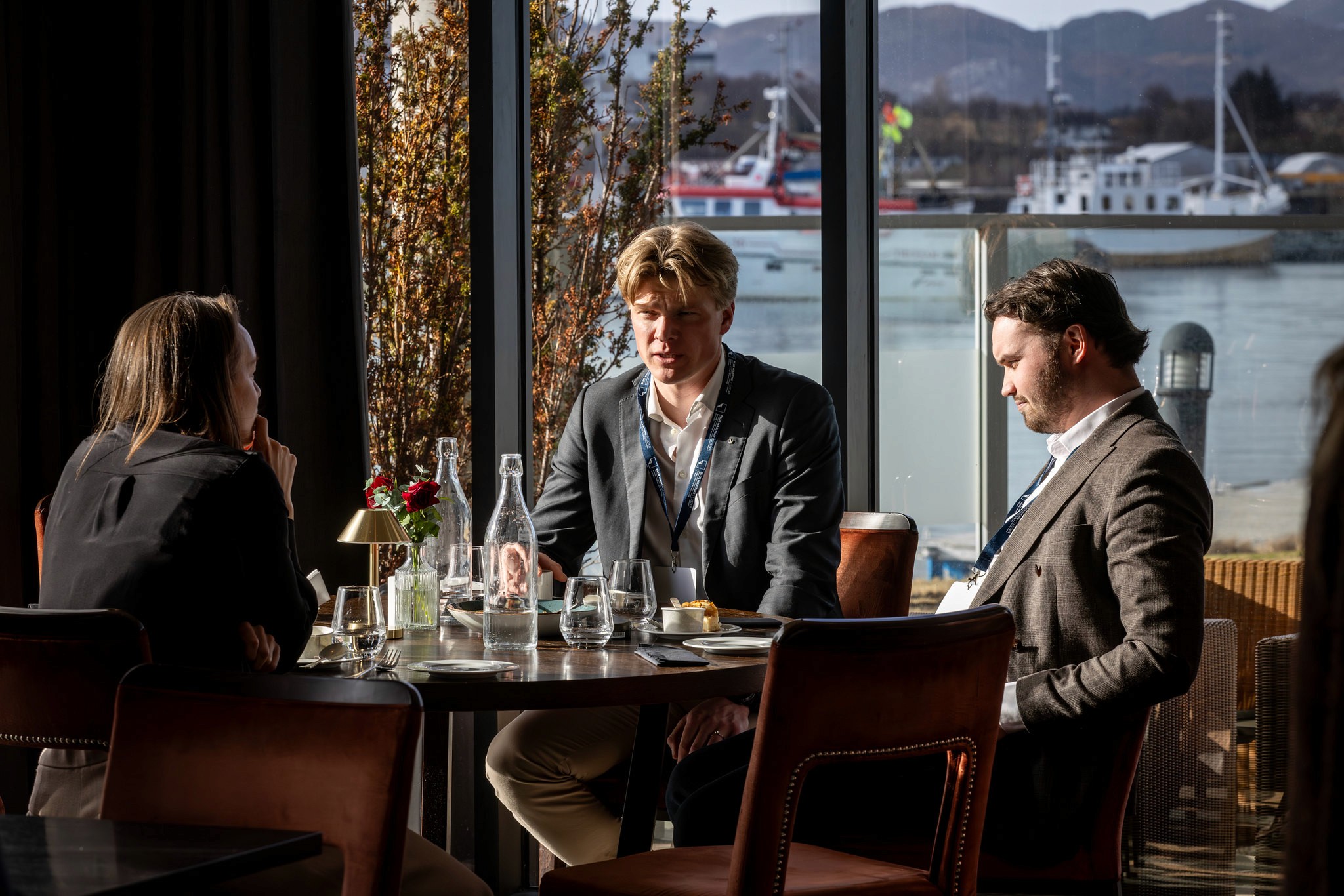
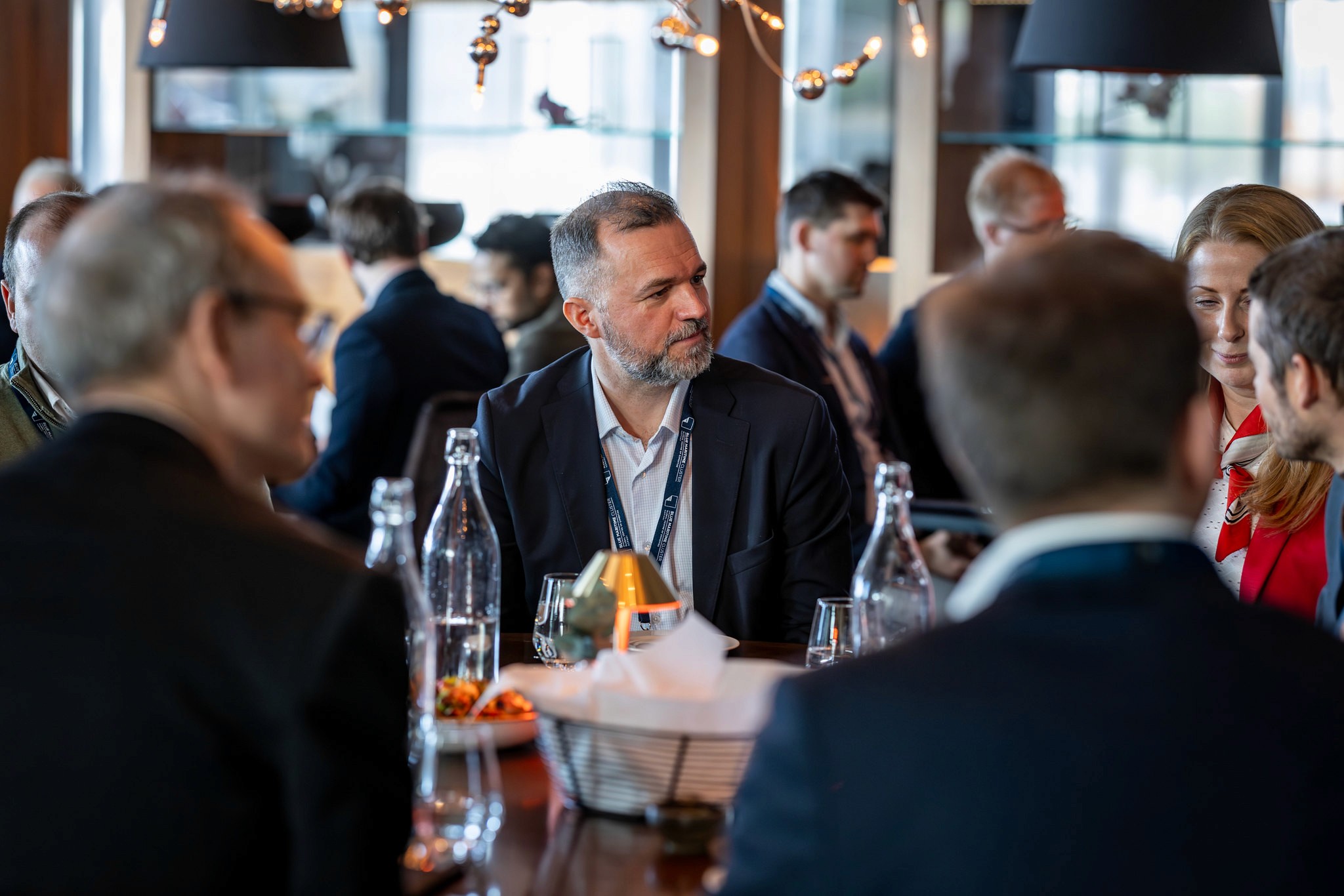
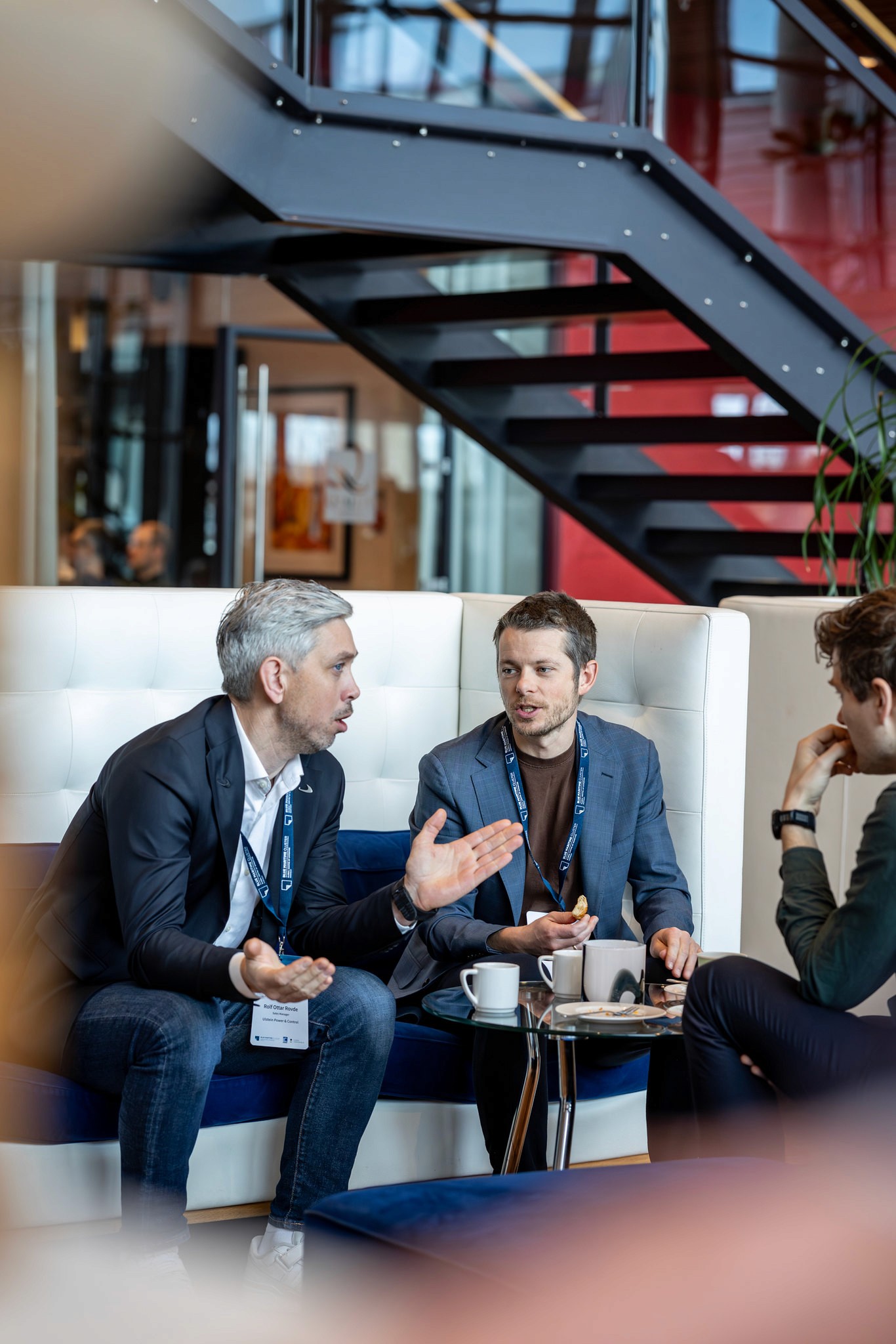
Day one featured site visits to Ulstein Verft and Evotec, giving participants first-hand insight into the maritime cluster with its cutting-edge shipbuilding and technology development. The day concluded with the Blue Maritime Hangout, a valued tradition and an important arena for informal discussions and strengthening relationships across the industry.
With a combination of site visits, technical sessions and strategic discussions, Ship Technology Days bridges the gap between innovation and implementation. Supported by partners across the maritime cluster, the conference showcases what the Norwegian model does best: close collaboration across the entire value chain to accelerate the development and deployment of new solutions.
Digitalization – From concept to real-world performance
Digitalization is always a core theme at Ship Technology Days — but this year, the discussions were more concrete than ever.
It was not about future visions, but about solutions already delivering value.
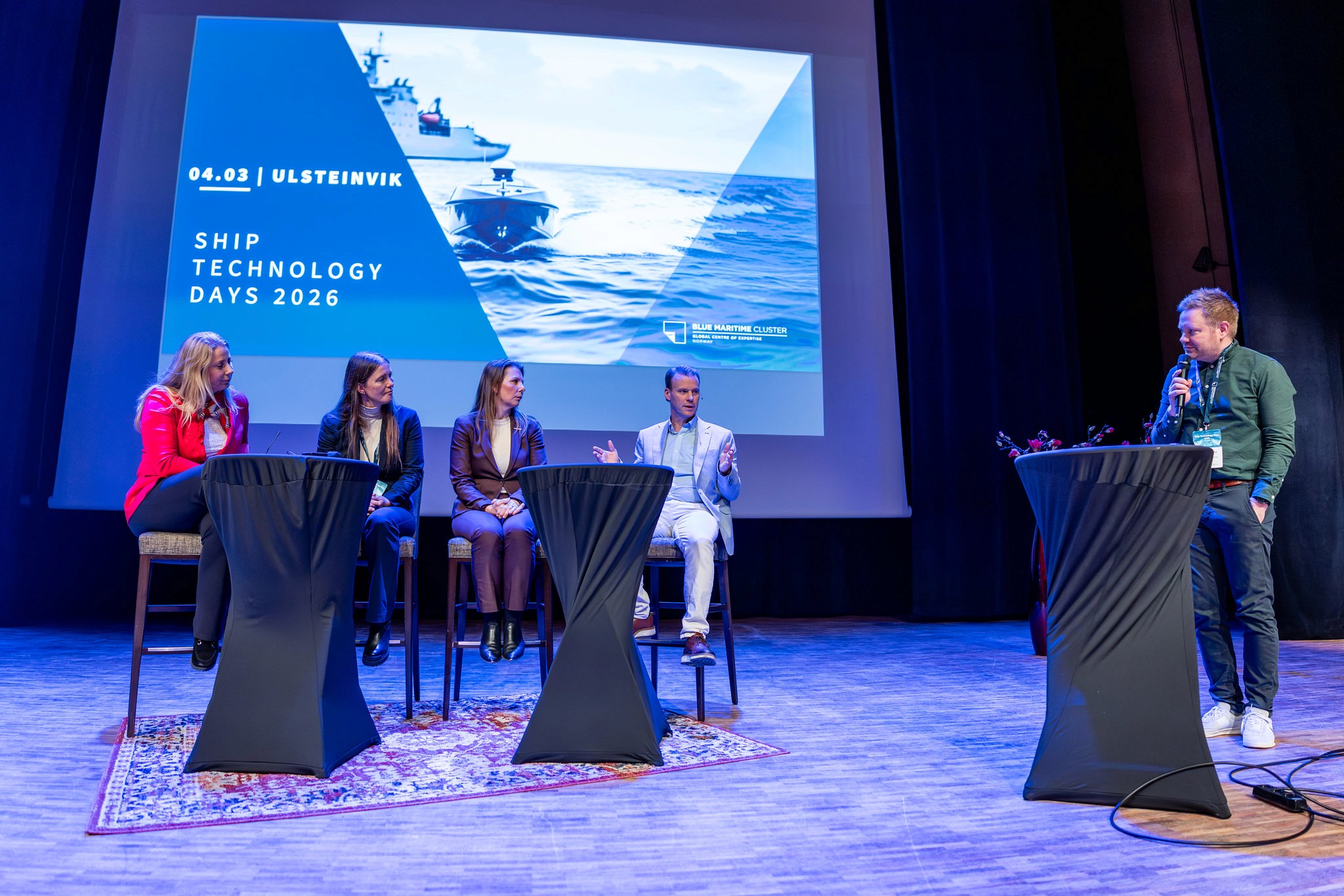
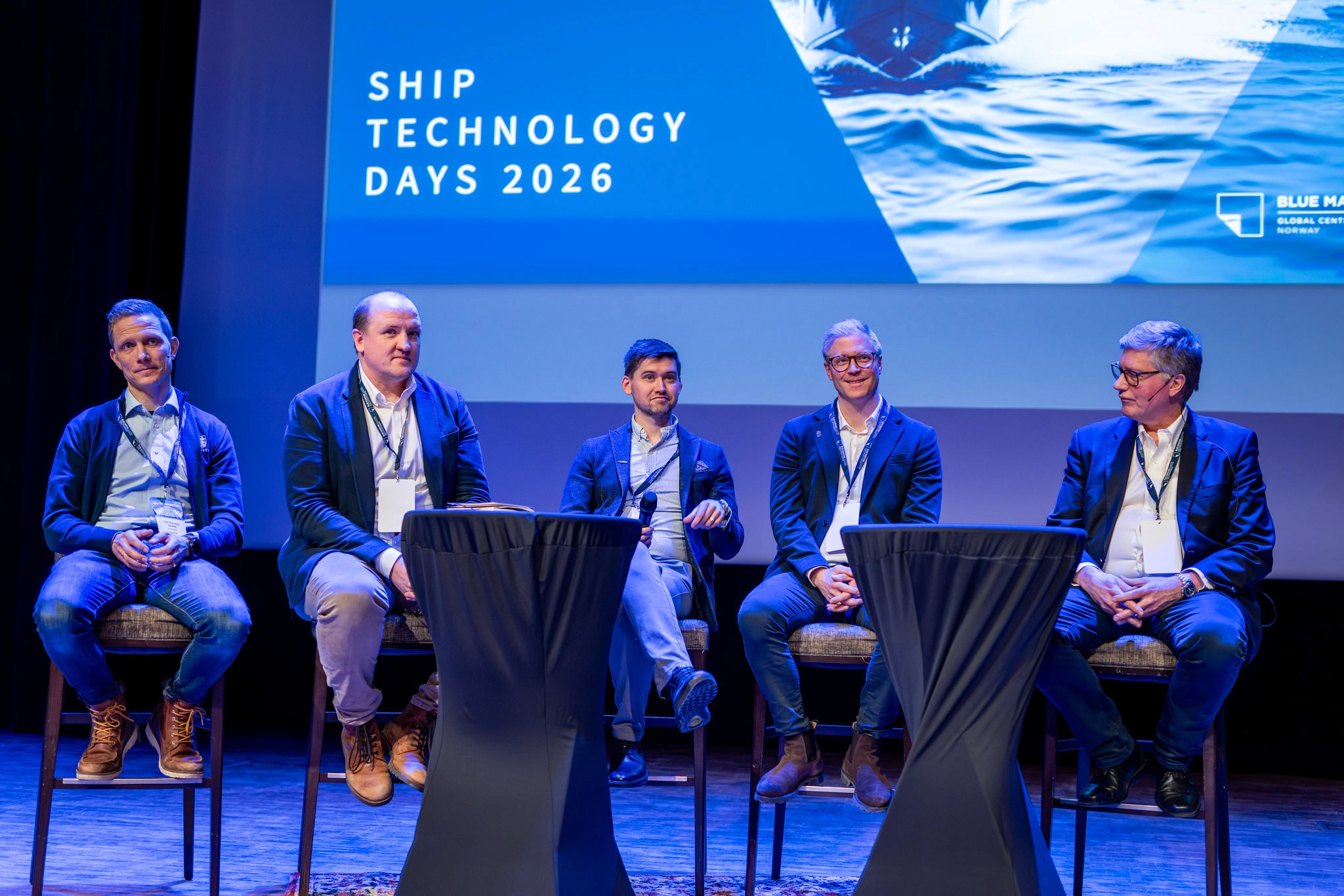
Contributions from Reach Remote, Aker QRILL Company, and additional perspectives from industry and research players in the session highlighted how digitalization is transforming operations across segments, from offshore services to fisheries.
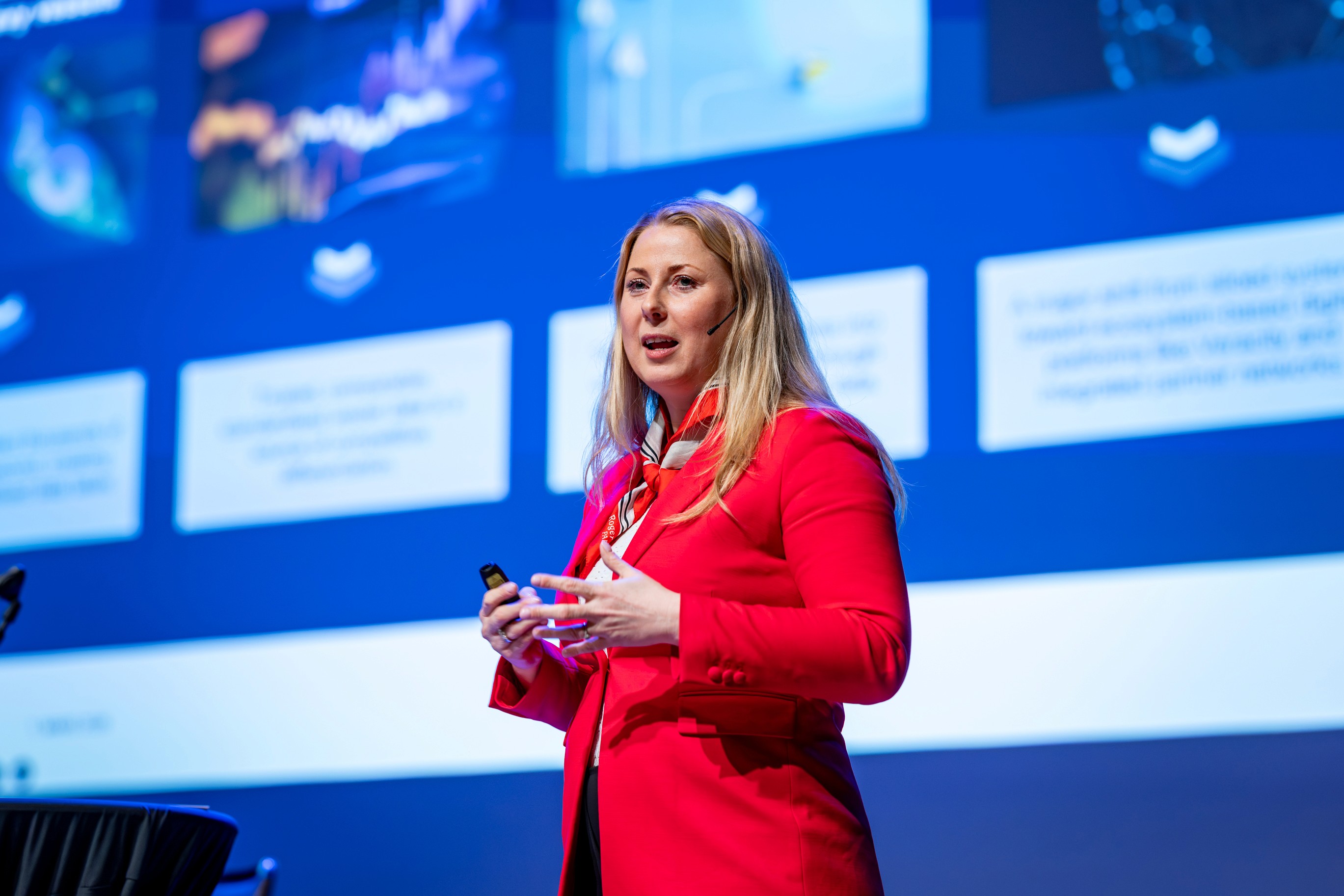
Reach Subsea explained about their experiences from Reach Remote’s first year in service. Their solutions show how remote operations can reduce cost, emissions and risk, while maintaining, and in some cased improving operational performance. (Read more here: https://nett.no/nyheter/nyskapande-fart%C3%B8y-skal-ut-i-eldpr%C3%B8ve)
“What have surprised me the most is how well and seamless the technology has actually worked”
Bjørn Døving Mathisen
Sindre Skjong, from Aker QRILL Company provided another strong example. Their work on next-generation krill operations, including the use of drones for detection and advanced decision-support systems, illustrates how digitalization can transform entire value chains — from search and detection to harvesting and logistics.
(read more here: https://nett.no/nyheter/vil-ha-fl%C3%A5te-med-dronar-for-%C3%A5-leite-etter-krill.)
Together, these presentations reinforced the key point, that the technology is not necessarily no longer the main barrier. At the same time, several speakers pointed to a structural challenge.
While Norway is world-leading in remote and digital maritime operations, it is often easier to test and deploy new solutions abroad than at home, exemplified with Reach Remotes vessel no.2 now being deployed in Australia.
Regulatory complexity, fragmented processes and high development costs can slow down the scalability of the new technologies. To maintain and strengthen our position, we must always seek to align efforts across authorities, regulators, industry and academia. Processes need to be streamlined, and pathways to implementation made faster and more predictable.
Remote Control Centres – From pilots to scalable systems
Remote Control Centres are rapidly becoming a cornerstone of modern maritime operations.
Through presentations from NTNU (Frostadbåten), Safetec and National Oilwell Varco (NOV), participants gained valuable insights into the development and operation of control rooms for remote-controlled systems, including crane operations and vessel-related functions.
The experiences shared demonstrate that the technology is maturing quickly. Control room concepts are becoming more refined, human-machine interfaces more intuitive, and operational procedures increasingly robust.
Yet, a major bottleneck remains, as the regulatory frameworks are still limited, and much of the development is currently driven through pilot projects. While this enables innovation, it also leads to repeated efforts and unnecessary costs, as each new project must navigate similar approval processes.
A clear message from this session was therefore the need for greater standardization of systems and interfaces, faster translation of pilot project approvals into formal guidelines, and improved sharing of operational experience and lessons learned across the industry.
If these elements are put in place, future developers, including today’s students, will be able to build on existing knowledge rather than starting from scratch.
At the same time, another important dimension was highlighted. We must remain open to new technologies that can further expand operational possibilities.
Solutions such as Squarehead Technology’s “Superhearing” illustrate how advanced sensor and perception technologies can unlock entirely new ways of operating remotely by improving situational awareness and enabling safer and more efficient operations.
The conclusion is therefore twofold. We need to standardize and scale what already works, while also ensuring that frameworks, operations and mindsets are flexible enough to adopt new technologies as they emerge.
The naval industry is a key driver for maritime Technology development
The naval industry is emerging as a key driver for the development of remote and autonomous maritime technologies.
Odd Sveinung Hareide, from the Norwegian Coastal Administration highlighted an increasingly complex threat landscape. Experiences with GNSS interference and hybrid threats underline the need for more robust, flexible and autonomous systems. He highlighted that the technologies currently in use are not sufficient, but that technologies required already exist. This creates both urgency and opportunity.
Norway has a strong foundation in remote operations. Kongsberg, exemplified this through their HUGIN USV project, that has played a leading role globally in autonomous underwater systems. Companies like Maritime Robotics further strengthen this position, contributing with advanced unmanned surface and aerial systems.
At the same time, global competition is accelerating rapidly. International players are scaling quickly, supported by significant capital. One example is the US-based company Saronic, now valued at around USD 4 billion.
This raises a fundamental question: Norway is technology-leading, but not capital-leading. How can we maintain and strengthen our position in a landscape where development is increasingly capital-intensive?
The answer lies in leveraging what has always been Norway’s strength and as Kjetil Høydal, from Norwegian Defence Materiel Agency(FMA) pointed out.
Close collaboration between defence, industry and research, combined with efficient transfer of technology between sectors is key for our success. At the first time, we are in the position to develop world leading standardized vessels with state-of-the art mission equipment.
A more grounded path forward
A clear shift was evident throughout Ship Technology Days 2026. The conversation is becoming more grounded.
While full autonomy has long dominated the narrative, the focus is now increasingly on realistic business cases for remote operations. Across presentations from Reach Remote, Aker QRILL Company, Safetec, SINTEF Digital, NTNU, Kongsberg Defence and Aerospace, NTNU, DNV, Squarehead, Kystverket end FMA a common outline emerged as remote and semi-autonomous solutions are now really starting to creating value. The The technology is proven and operational, but the main challenges are related to regulations to really scale the emerging technologies.
The industry has moved beyond experimentation and is now focused on implementation, but at the same time, international competition is intensifying.
Norwegian companies are at the forefront technologically, but global players are scaling faster, backed by significantly larger investments. Maintaining a leading position will therefore require both speed and coordination.
This is where long-term initiatives become critical.
The MIDAS project is building capacity for maritime autonomy in the region, strengthening competence, collaboration and access to test arenas. In parallel, the emerging Maritime AI Centre (read more: https://nett.no/nyheter/i-gang-med-nytt-ki-senter-h%C3%A5par-at-dokke-blir-med) will contribute to accelerating the development of intelligent, data-driven maritime systems.
Together, these initiatives form a strong foundation for us in GCE Blue Maritime to contribute to the future and to bring both the maritime industry and academia faster to the target.