Open Simulator Platform Conference 2025
21. nov. 2025
In a world where maritime systems are becoming increasingly complex, no single company—or even sector—can solve the challenges alone.
Co-simulation, digital twins, verification tools and advanced modelling require collaboration across disciplines and industries. That is why the annual Open Simulation Platform (OSP) Conference has become a key arena: a meeting point where experts come together to build shared frameworks, identify common bottlenecks, aiming to push the entire industry forward.
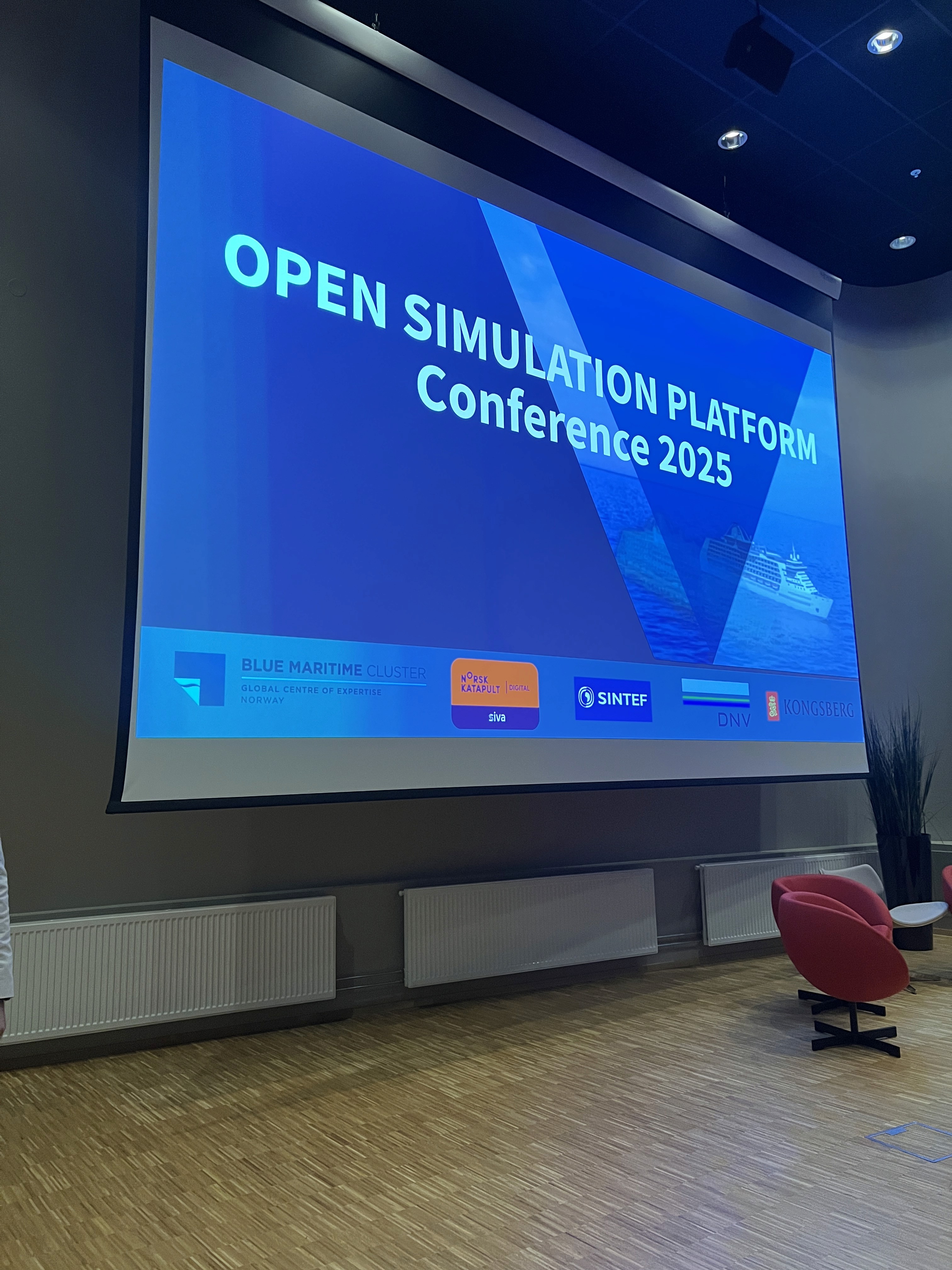
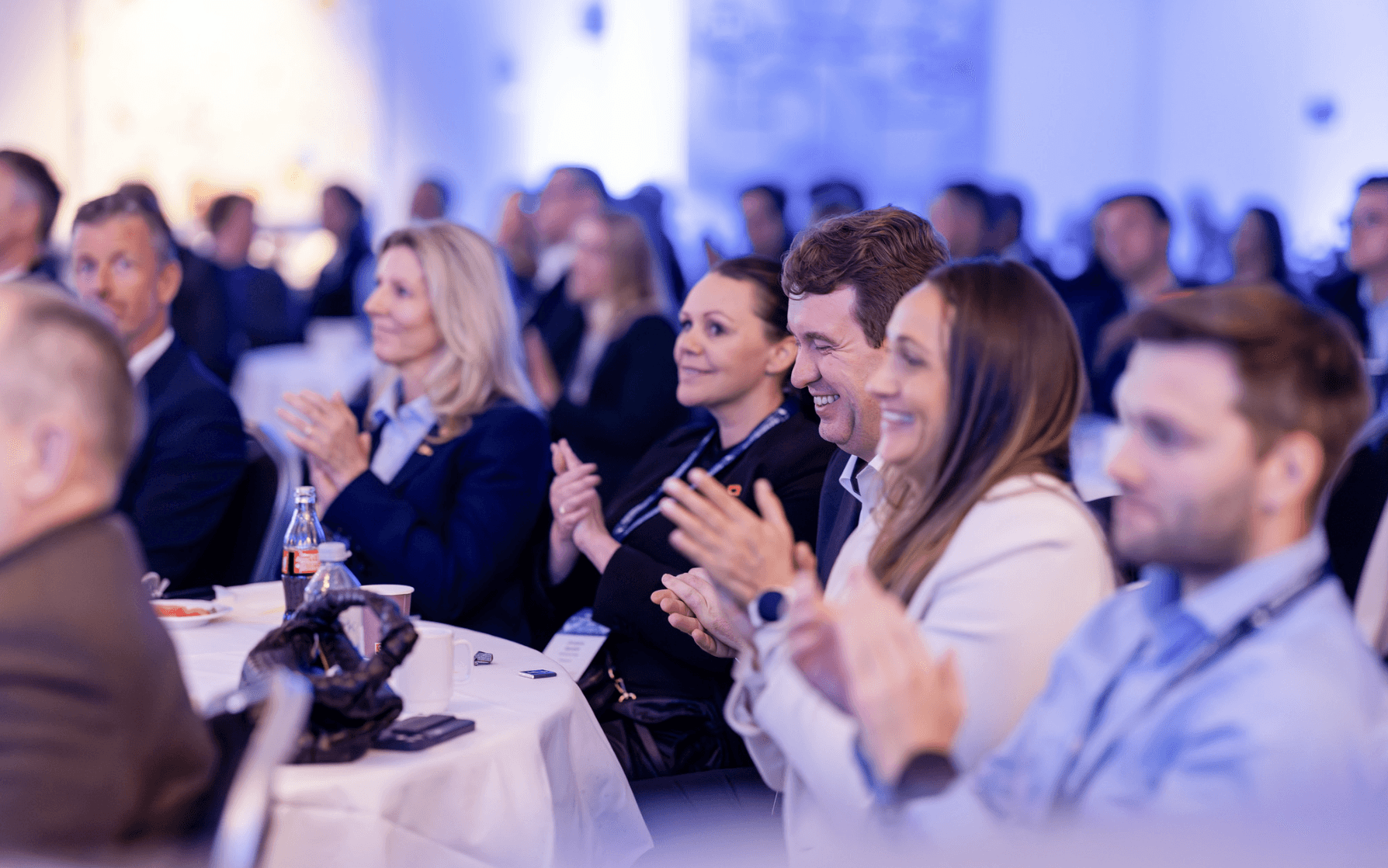
Hosted in Ålesund by GCE Blue Maritime Cluster, Norsk Katapult Digital, SINTEF Nordvest, DNV, and Kongsberg Maritime, the 2025 edition gathered researchers, software developers, ship designers, and operators to explore the next steps for maritime simulation.
Pilot Projects Show the Way
A core message throughout the conference was clear: we need real, ambitious pilot projects to push co-simulation in maritime forward.
Projects such as Sea Zero, presented by Vard and SINTEF Ocean, show how integrated simulation is essential not only for vessel design but also for operational decisions, safety validation and optimization of new green technologies.
Pilot initiatives give developers access to real-world complexity. They expose limitations in today’s workflows, highlight where simulation models need to be faster and more interoperable, and create the learning cycles required to improve tools and standards such as FMI and FMU-based co-simulation.
Industry contributions from Damen, Equinor and the Norwegian Coastal Administration further underscored the message: without concrete pilots, the industry cannot mature its simulation processes—or build the confidence needed to deploy them widely.
Learning From Other Industries
Compared to aerospace and automotive, the maritime industry faces a structural disadvantage: low volumes and high variation. This makes standardization, platform thinking and system integration far more challenging.
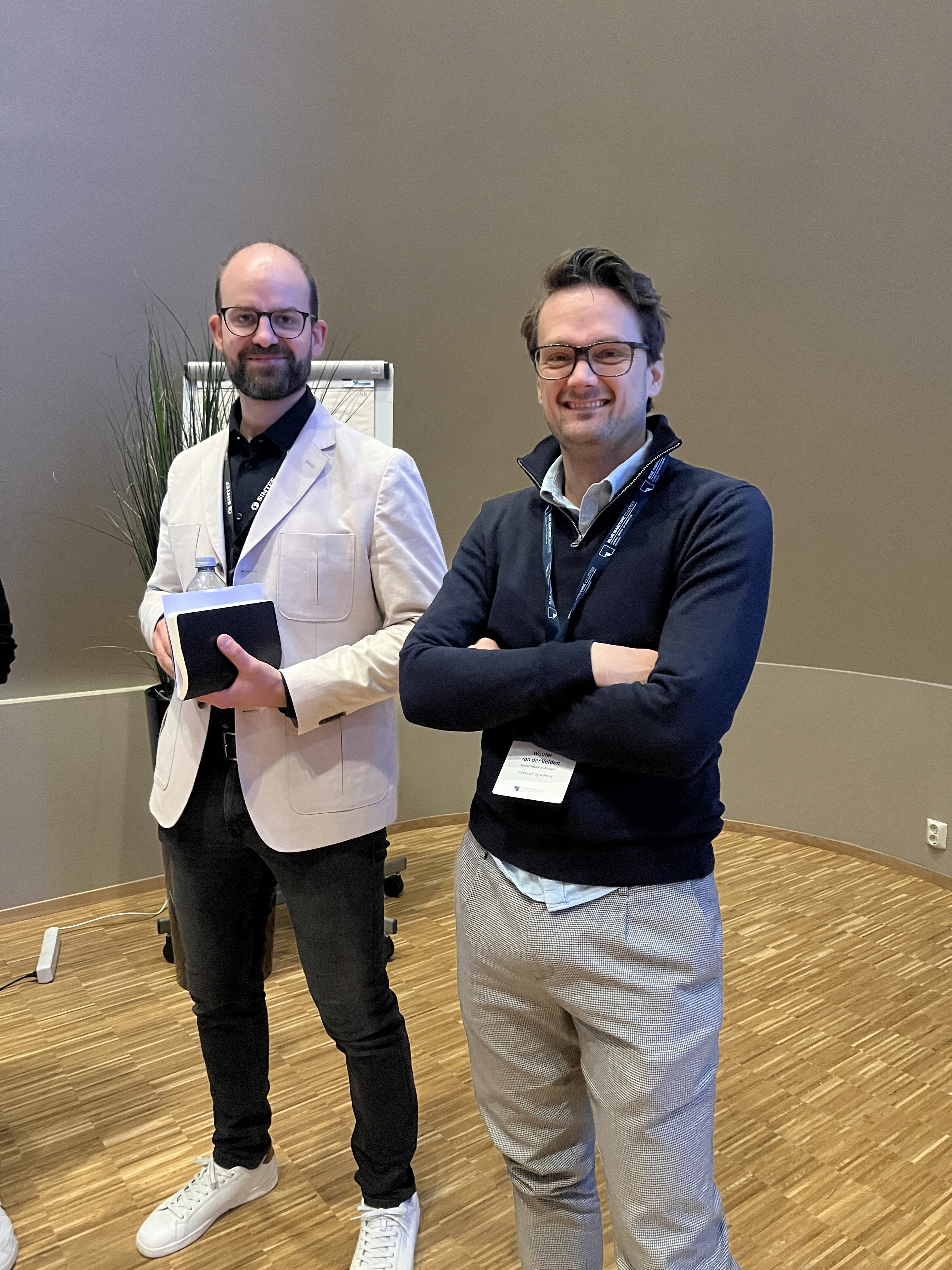
Therefore, bringing global players like Airbus and Dassault Systèmes into the OSP arena is both strategic and necessary.
Airbus shared how it uses model-based systems engineering (MBSE) and FMI for verification, validation, and model reuse across large-scale programs. Dassault demonstrated the openness of the 3DEXPERIENCE platform for marine engineering—highlighting how maritime could benefit from common data structures, stronger interface definitions and cross-domain integration already used in other sectors.
The conclusion from these sessions was unmistakable:
If maritime simulation is going to scale, major software vendors must be part of the journey.
Their experience with high-volume industries provides blueprints for efficiency and robustness—blueprints that the maritime world can adapt rather than reinvent.
A Truly International Meeting Point
The 2025 conference reinforced the importance of mixing perspectives. Speakers and participants travelled from Germany, Finland, the Netherlands, France, Denmark, and across Norway—reflecting how simulation is a truly global discipline.
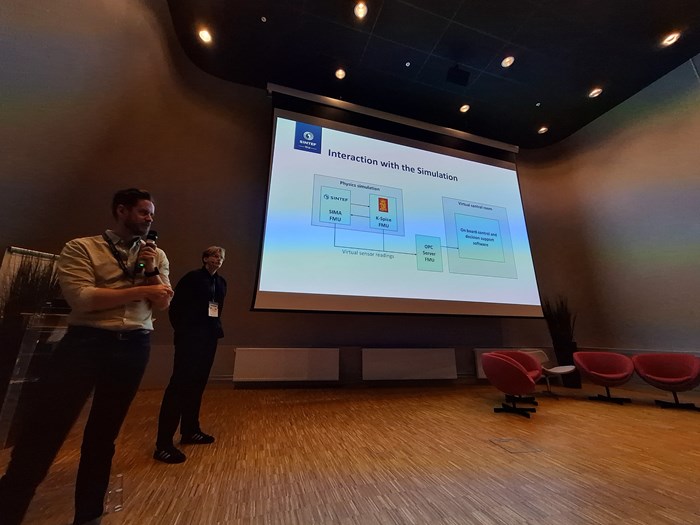
The first day blended contributions from academia and industry, including technical abstracts from HTW Berlin, Åbo University, Aalto University, DNV and NTNU. These sessions showcased cutting-edge methods ranging from multiobjective optimization for autodocking to new approaches for transforming PLC logic into FMUs.
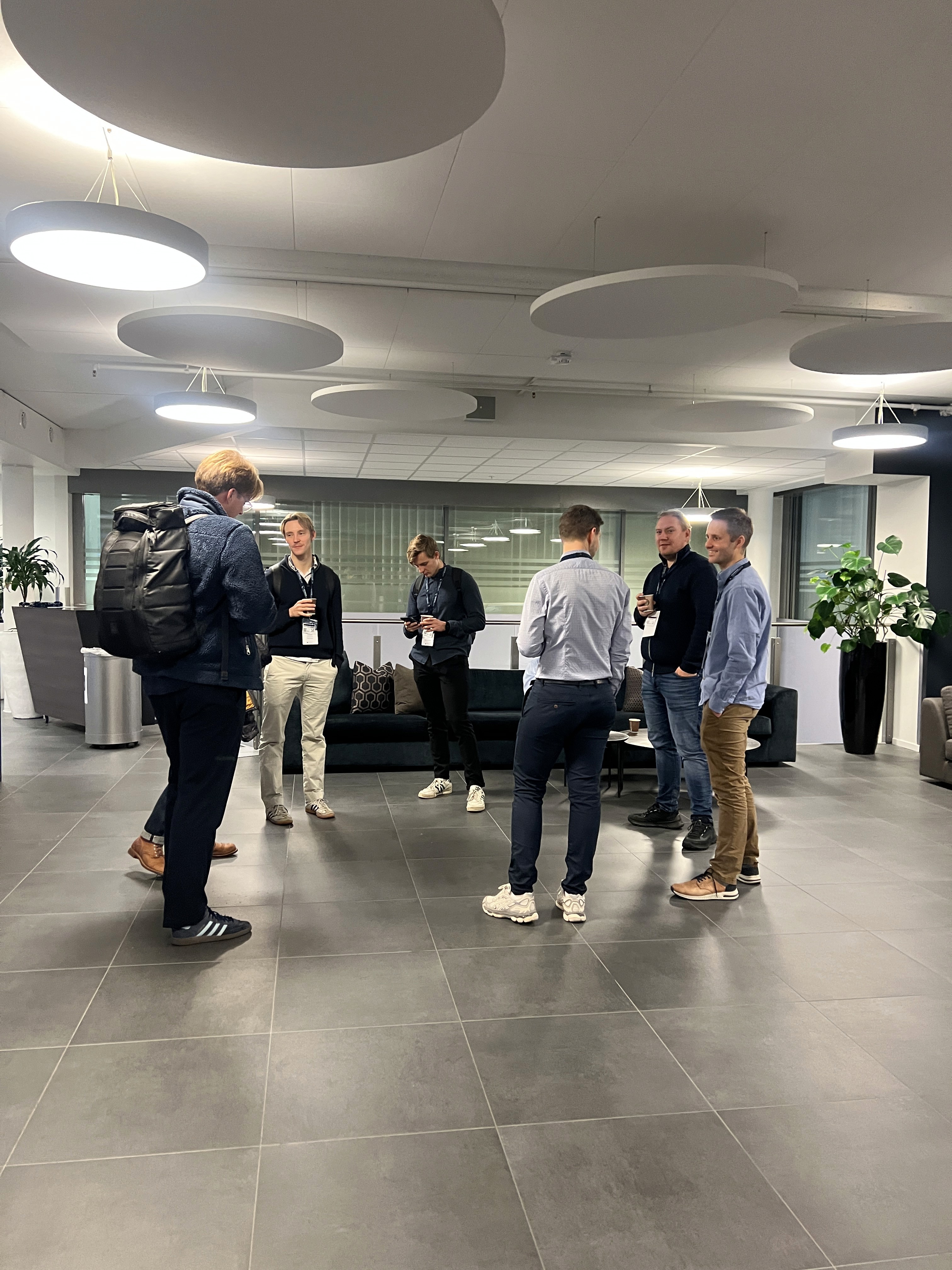
The day concluded with the popular Blue Maritime Hangout, an informal networking session where researchers, developers, shipdesigners, and operators could challenge each other, share experiences, and explore new collaborations. Poster presentations and MAROFF project pitches added further depth, making it a genuine melting pot of international maritime competence.
Workshops Defining the Next Steps
Day two shifted gears—from presentations to hands-on problem solving.
Through structured group work, participants addressed two fundamental questions:
1. What do people actually need to use co-simulation more?
2. What research and innovation projects should we launch next?
Discussions highlighted topics such as discrete co-simulations, interoperability challenges between tools, and the need for better interface standards and shared model libraries.
Each group delivered a one-pager summarizing barriers, opportunities, and concrete project ideas. These will hopefully form the basis for future collaboration proposals in OSP, MAROFF and EU frameworks.
Participants highlighted that maritime companies are willing to invest—but only when modelling and co-simulation deliver obvious added value, reduce risk, and integrate smoothly into existing workflows. To achieve this, the industry must continue developing shared tools, a common language, and interoperable platforms that lower the threshold for everyday use and make the benefits impossible to ignore.