How geopolitical understanding relates to export control
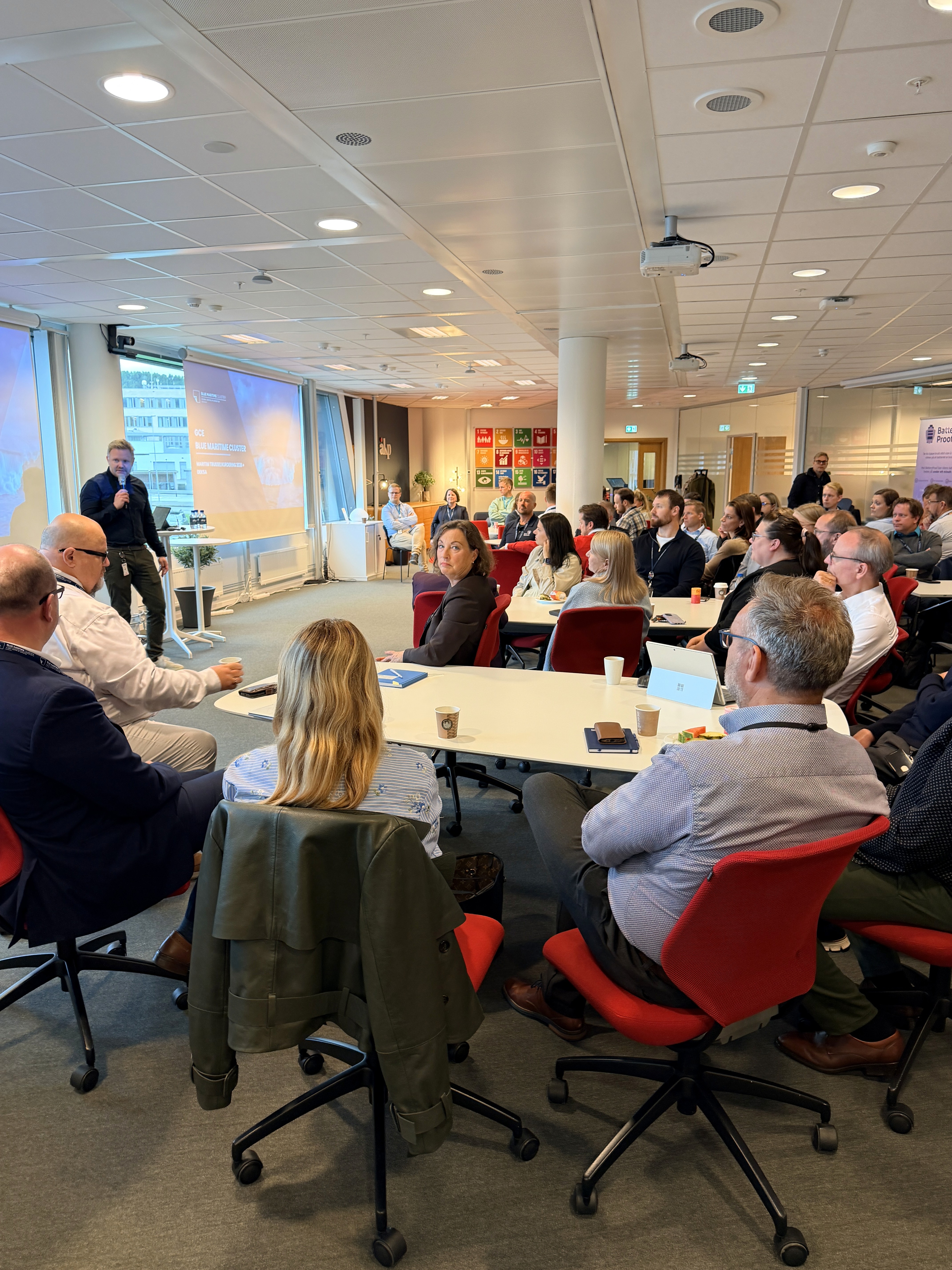
When PST, NSM, Norma Cyber, AFRY and DEKSA met the maritime cluster at Maritime Threat Assessment 2026, one thread ran through the whole day: covert procurement attempts, carried out through complex corporate structures, shell companies and front men.
The big, national threat and security assessments were broken down into something concrete that actually affects the maritime industry and the maritime cluster.
Just the tip of the iceberg
PST said they are seeing a significant number of attempts at covert procurement in the region, also targeting the maritime industry – and stressed that what has been uncovered so far is likely only the tip of the iceberg.
Behind these attempts are often corporate structures built specifically to hide who the goods ultimately end up with. Annette Tjaberg, Director of the newly established DEKSA (the Norwegian Directorate for Export Control and Sanctions), illustrated just how complex this can get as some goods have been discovered to be traded through five to six countries before finally ending up in Russia. She pointed out that there is every reason to believe this is also happening on a larger scale in Norway, without anyone really knowing about it. This makes it a shared responsibility.
DEKSA was established precisely to bring responsibility for export control and sanctions under one roof. Ole-Morten Parelius, Director of Export Control at DEKSA, walked the audience through how the regulations work in practice for both civilian and military-relevant equipment. He stressed the importance of engaging with DEKSA early, before delivering to demanding markets, rather than discovering problems after the equipment is ready for shipment.
Ulrikke Asbøll of Acapo Onsagers highlighted a side of export control that is often overlooked: the link between intellectual property and export applications. When a company has already sorted out who owns and holds the rights to the technology being exported, that improves the odds that the applications DEKSA processes actually go through. A strong IP strategy, in other words, is not just a safeguard against technology and know-how ending up in the wrong hands – it is also a competitive advantage in the export process.
The value we need to protect
NSM took a step back and reminded the audience why understanding the value the maritime sector holds for society, and how we protect it together.
Norma Cyber gave a picture of the cyber threat facing the maritime sector: the number of incidents has been relatively stable, and other sectors have recently been hit harder than maritime. But there are clear signs that shipping and in particular LNG may become more exposed going forward, as more scanning activity is detected to be directed at these domains. At the same time, so-called OT hacktivists are becoming more sophisticated through the use of artificial intelligence. This is a trend that appears to be growing.
Digital tools to catch red flags
What does this look like in practice for a major exporter? Kongsberg Maritime showed how it uses digital tools and artificial intelligence to map so-called red-flagged projects, to make sure that none of the tens of thousands of orders it handles every month end up somewhere they shouldn't.
At the same time, there is good reason to believe that small and medium-sized companies in the cluster are not able to follow up procurement at the same scale or with the same tools – which can make them a more vulnerable target for the same kind of covert attempts.
The Blue Maritime Resilience Report
The Blue Maritime Resilience Report is a collaboration between GCE Blue Maritime Cluster and AFRY, presented by Finn Børre Holen. The report's aim is to break the big, national threat and risk pictures down into concrete incidents and insights that individual companies can carry forward into their own security assessments – rather than being left with a high-level threat picture that is hard to translate into action. The report also looks at how resilient the maritime cluster in Northwestern Norway is overall, and which measures member companies should prioritise going forward. You can find the last quarterly report in our knowledge base. https://kb.bluemaritimecluster.no/
A shared responsibility
Over the course of the day, it became clear that everything is connected – from the global threat picture down to the individual export control case. One thing is for each company to be informed about the security situation. Just as important is standing together as a cluster. That has never mattered more than it does now.


